News Desk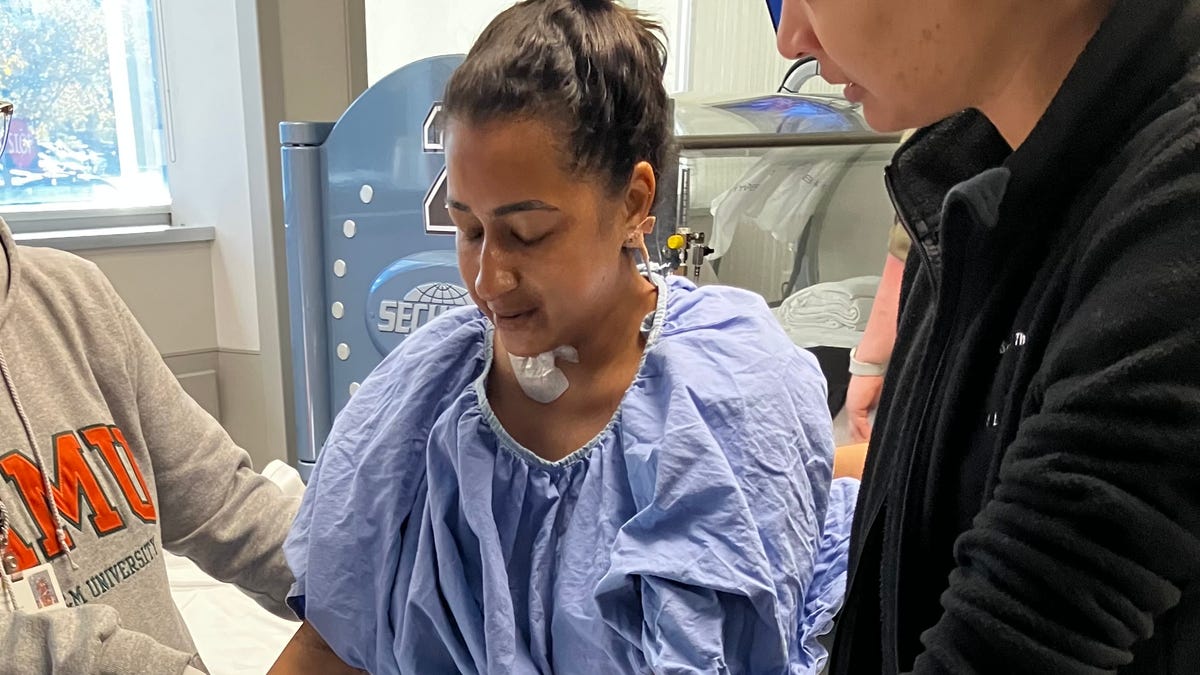
Christina A. Cole | Special to USA TODAY Show Caption I went to the hospital for a routine procedure to remove uterine fibroids . Less than 24 hours after I was sent home, I was fighting for my life.
In 2023, at 35 years old, I underwent a hysteroscopic myomectomy. I expected pain and recovery. Instead, I went home and immediately began deteriorating.
The pain was severe. My body felt wrong. By the next day, my husband and best friend brought me back because they could see I was getting worse, not better.
We tried to communicate that this was more than routine postoperative pain . Yet the focus remained on treating the pain – possibly with stronger medication – instead of asking why the pain was so extreme. I didn’t need more medication.
I needed someone to listen. My husband refused to take me home again. We went to the emergency room.
Within minutes of arriving, I went into cardiac arrest. I flatlined. Had I returned home and tried to manage the pain, I do not believe I would be alive today.
As my condition became catastrophic, doctors opened my abdomen. They found perforations involving my uterus and bowel. Infection had spread throughout my body.
I developed septic shock , a body's extreme, dangerous reaction to infection. My organs began failing. I became the sickest patient in the hospital.
My family was told I was not expected to survive the next few days. Months of hospitalization followed. Multiple surgeries.
Permanent complications. I lost several fingertips and underwent partial amputations of both feet. I endured reconstructive procedures, rehabilitation and the overwhelming task of learning how to live inside a body that no longer worked the way it once had.
Survival was not the end. In the ICU, I experienced ICU psychosis – a terrifying, disorienting state that left me unsure of what was real. I feared I was losing my memories, losing pieces of myself.
Even after I stabilized, I worried the trauma had permanently altered my mind. That fear stayed with me long after I left the hospital, along with the insomnia that still follows me. My body remembers the alarms, the panic, the nights I wasn’t sure I would wake up.
Sleep is supposed to be restorative. For many sepsis survivors, it becomes another battle. Today, I can stand.
I can walk. I also need a wheelchair. Those facts are not contradictory.
What people see when I walk into a room does not reveal how far I can walk, how long I can stand, how much swelling I endure or what the pain will feel like later. They cannot see neuropathy or sporadic nerve pain. They cannot see the calculation behind every step.
My recovery includes chronic pain, swelling, changes in endurance and mobility, organ issues, new dietary restrictions and histamine intolerance I never had before. My body behaves differently from one day to the next. And the pressure to “return to normal” – to work, to parenting, to everyday life – does not match the reality of living in a body that has survived sepsis.
Recovery is not linear. It is not predictable. And it is not quick. 'I wish someone had told me' Approximately 1.7 million adults in the U.S., and more than 18,000 children, develop sepsis, according to the Centers for Disease Control and Prevention .
And 20% of adults and 10% of children who get sepsis die while hospitalized or sent to hospice. Many people don’t realize that once you’ve had sepsis , you are at higher risk of developing it again. That fear lives quietly inside survivors.
It shapes how we move through the world, how we monitor symptoms, and how we try to function in society while managing exhaustion, pain, cognitive changes and the possibility of reinfection. Organizations working with sepsis survivors recognize that the aftermath can last months or years. Sepsis Alliance describes post-sepsis syndrome as a collection of physical, cognitive and psychological difficulties: fatigue, pain, limb swelling, reduced organ function, memory issues, depression, nightmares and PTSD.
The CDC and the UK Sepsis Trust also describe ongoing challenges survivors may face during recovery. I wish someone had told me. I experienced every symptom alone and thought I was losing my mind.
No one educated me about sepsis or post-sepsis syndrome during my hospital stays or before discharge. I eventually had to search for answers myself. Think about what that requires of someone who has just survived critical illness: exhaustion, pain, trauma, difficulty concentrating, a family still recovering – and suddenly you’re expected to research your own condition.
A sepsis survivor should not have to become a researcher simply to understand what happened to their body. 'At every stage, information mattered' This problem is bigger than sepsis . It is a health care problem. We tell patients to advocate for themselves, ask questions, compare options, follow instructions and recognize warning signs – yet we often fail to give them the information they need to do any of those things effectively.
Patients are expected to make consequential decisions inside a system they may not understand, while frightened, sick, exhausted or caring for someone they love. My experience made that reality impossible to ignore. I needed useful information before my procedure.
I needed people to listen when my condition changed. I needed an explanation of what had happened to my body. And after I survived, I needed meaningful guidance about recovery.
At every stage, information mattered. 'Recovery should not be a puzzle' Sepsis recovery education should be part of routine discharge planning. Before a patient leaves the hospital, someone should sit with them – and their family – and explain, in plain language: You had sepsis. This is what happened to your body.
These are the physical, cognitive and emotional changes you might experience. These symptoms require urgent medical attention. This is whom to call when something changes.
That conversation should be supported with written information. Survivors may not remember everything said during discharge. Families should be included because they are often the ones witnessing the struggle at home.
Recovery should not be a puzzle an exhausted survivor is expected to assemble alone. I have encountered skepticism because I do not always “look disabled.” Someone may see me standing and assume I do not need my wheelchair. They do not see what happens afterward.
A photograph cannot reveal neuropathy. A smile cannot reveal pain. Walking into a room cannot reveal what it took to get there.
This is one reason I continue telling a story that is still painful to tell. Somewhere, another sepsis survivor is being discharged. Someone is awake at night wondering why their body feels unfamiliar.
Someone is frightened by pain or exhaustion they were never warned about. Someone’s loved one is searching the internet because no one explained what might happen next. And somewhere, a patient – with sepsis or something entirely different – is telling a health care professional: Something is wrong.
I want us to listen. Survival cannot be our only measure of success. We have invested extraordinary skill and urgency into recognizing sepsis and saving lives.
We need the same commitment to understanding the people who survive it. Every sepsis survivor should leave the hospital knowing at least this: What happened to you was serious. Recovery may take time.
What you are experiencing deserves attention. And you should not have to navigate what comes next alone. Christina A.
Cole is a sepsis survivor, patient advocate, keynote speaker and author of "Through the Ashes." After surviving septic shock, cardiac arrest and life-altering complications, she has focused her work on patient safety, recovery, healthcare communication and helping patients and caregivers better understand and navigate the healthcare system. Facebook Twitter Email
Source: USA Today